Selfhosting Homelab
I run my own homelab with multiple selfhosting services to cater my media and personal used software, powered by Truenas SCALE, I have build multiple projects using my homelab as server space with my own domain
Skills
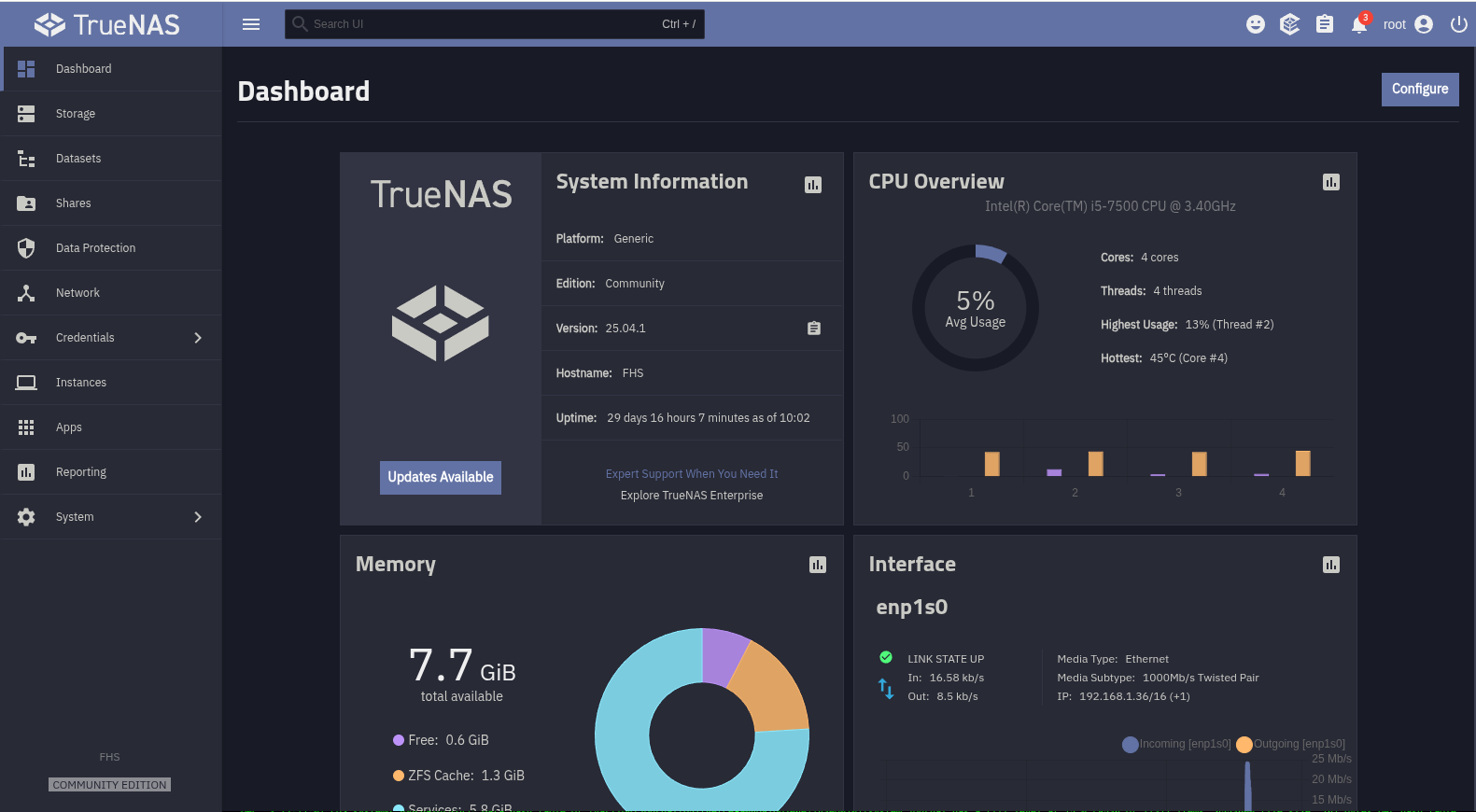
Self-Hosted Server Maintenance & Homelab Engineering
Over the years, I’ve built and maintained a fully self-hosted infrastructure that powers most of my day-to-day workflow. What started as a simple experiment in running a few containers eventually grew into a complete homelab ecosystem—covering networking, cloud resources, automation, and service orchestration.
Security
Security is a core principle of the entire setup. The backend network is fully private via Tailscale, all services are containerized with strict access controls, and sensitive endpoints are protected with firewalls, authentication layers, and encryption in transit and at rest. Regular updates, monitoring, and vulnerability scanning are part of the operational routine to minimize risk.
Network & Infrastructure
At the core of the setup is a dedicated homelab server running a collection of containers and lightweight VMs. The entire backend environment is tied together using a Tailscale mesh VPN, allowing all devices—local and cloud—to communicate securely without exposing anything to the public internet. This forms the backbone of my personal network stack, giving me private access to all services no matter where I am.
Combine it with my own domain name address, I can access my core software and data anywhere. I even shared my services to families so that they can enjoy the services built on top of my server stack.
Personal Cloud Layer
To replace common SaaS tools, I operate my own cloud stack that handles file syncing, backups, automation, and personal data services. Everything is containerized, monitored, and regularly backed up to off-site storage. This ensures reliability while still keeping full control over my data.
Cloud Integration
My homelab extends beyond the house, integrating with Oracle Cloud Infrastructure for compute workloads and Cloudflare for DNS, routing, and network optimization. This hybrid setup lets me offload certain tasks to the cloud when needed—such as running always-on services or handling public-facing endpoints—while keeping sensitive or resource-heavy workloads on my own hardware.
Open-Source Service Hosting
A big part of the environment is built around self-hosting open-source alternatives to commercial SaaS platforms. I run multiple services—media servers, monitoring dashboards, automation tools, development utilities, and general productivity apps. The goal is to replace subscriptions with solutions I control, while still maintaining reliability and performance.
Outcome & Experience
Managing a self-hosted environment at this scale has significantly reduced dependence on third-party SaaS, cut recurring costs, and provided complete ownership over the tools I use daily. More importantly, it serves as a hands-on platform for improving my skills in networking, Linux systems, cloud integration, container management, and infrastructure troubleshooting.
This homelab continues to evolve, acting as both a practical daily driver and an ongoing learning environment for experimentation and refiNew theme and additional section - personal projectsnement.
Some of the things I Selfhosting
- Joplin Note server
- Media server - So I can stream my music collection on the go
- Homebox - Personal Asset management
- Personal Website - To showcase my projects and skills
- Home Assistant - Smart Home Automation (experimental)